Albany Plumbing Pros Blog
High-Tech Detection: How We Find Leaks Without Tearing Down Your Walls
Stop the guesswork. See how acoustic sensors, thermal imaging and pressure tests locate a hidden leak so only one small spot needs to be opened.
Why Old-School Leak Hunting Falls Short
Not long ago, finding a hidden leak meant educated guessing. A plumber would cut an opening where the stain looked worst and hope for the best. The trouble is that water travels. A ceiling stain can sit ten feet from the real leak, and a wet baseboard can trace back to a pipe in another room. Guesswork turns one problem into several holes in the drywall.
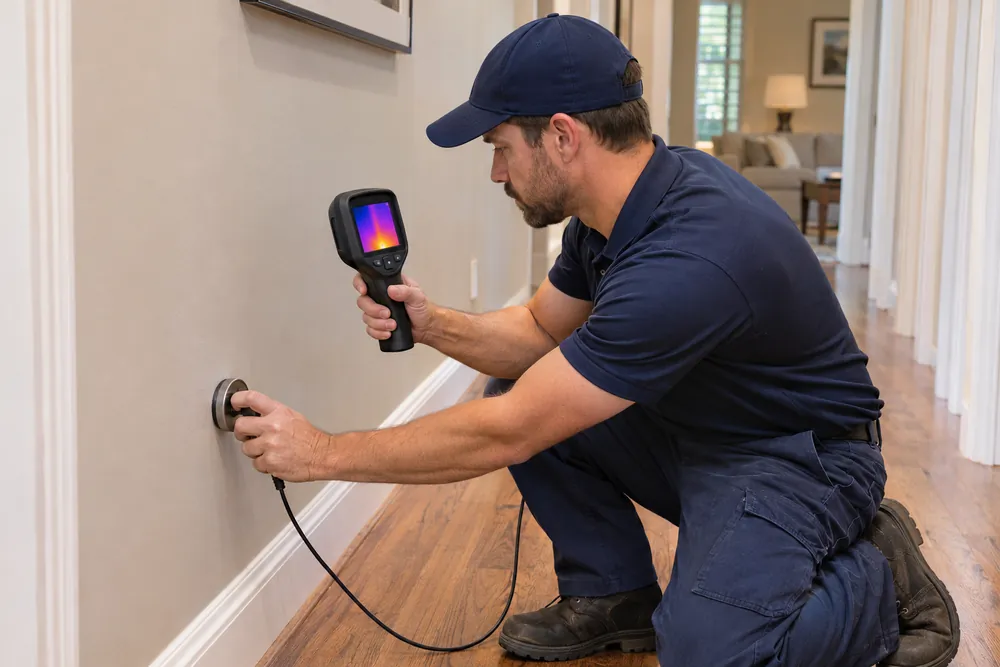
Today's methods narrow the search before anyone touches a wall. They are not magic, and each tool has limits, but together they can usually place a leak within a few inches. That is the difference between a small patch and a renovation.
A Walk Through a Leak Detection Visit
Every home is different, but a typical visit follows a clear order.
- 1
Listen to the history
We ask what you noticed: a bill spike, a sound, a stain, a warm floor. Those clues tell us where to start.
- 2
Check the meter
With every fixture off, we watch the meter to confirm water is moving somewhere.
- 3
Isolate the system
Using shutoff valves and pressure gauges, we find out which line holds pressure and which one does not.
- 4
Listen and scan
Acoustic gear listens for escaping water, a thermal camera scans surfaces and a moisture meter maps damp areas.
- 5
Confirm and mark
We cross-check the findings, mark the spot and explain the result before any repair begins.
What Each Tool Can and Cannot Do
Honest leak detection includes understanding the limits of the equipment.
| Tool | Strength | Limit |
|---|---|---|
| Acoustic listening device | Hears the hiss of pressurized water, even under concrete | Background noise and plastic pipes can muffle the sound |
| Thermal camera | Reveals cool or warm patches caused by moisture or hot lines | Needs a temperature difference to show anything useful |
| Moisture meter | Measures how wet drywall, wood and flooring are | Reads only near the surface and shows where water ended up, not always where it started |
| Pressure test | Proves a line is leaking and isolates which one | Does not show the exact location by itself |
| Sewer camera | Shows cracks, roots and collapsed drain pipe | Reaches drain lines only, not pressurized supply pipes |
Why Plastic Pipes Are Harder to Hear
Copper and steel carry the sound of a leak well. PEX and PVC are quieter, so a leak in a plastic line can be harder to pinpoint by sound alone. That is why one tool is rarely enough. We combine acoustic work with pressure testing and thermal scanning. In stubborn cases, a technician can use a tracer gas that escapes through the leak and is picked up by a sensor above the floor.
How to Prepare for the Visit
Make the inspection quicker and more accurate
- Note when you first noticed the problem and what changed around then.
- Gather a recent water bill or two so we can see the pattern.
- Clear access to the water meter, main shutoff and water heater.
- Move furniture away from walls or floors where you saw stains or warmth.
- Keep pets secured and tell us about any past repairs.
Reading Your Water Bill Like a Detective
Your bill is one of the best leak detectors you own. Compare this month with the same month last year, since summer irrigation and guests change normal use. A jump of several thousand gallons with no change in routine is worth investigating. Check the meter at a quiet time, such as late at night, and look for movement with every fixture off. A running toilet can waste hundreds of gallons a day without making much noise, so check toilets first with a few drops of food coloring in the tank. If color shows up in the bowl without flushing, the flapper is leaking.
When a Leak Is Not a Pipe Problem
Not every stain means a pipe leak. Roof leaks, condensation on cold supply lines, a leaking air conditioner drain line and a failed window seal can all look like plumbing trouble. A good technician rules these out before opening anything. That is another reason the first step is a conversation and a test of the system, not a saw. In a humid climate like Albany's, a sweating cold pipe in a hot attic can drip for hours and leave a stain that looks exactly like a burst line.
What Happens After We Find the Leak
Once the leak is located, you decide how to proceed. A small access opening is made, the damaged section is repaired or replaced, and the system is tested. In most cases, the repair involves one opening instead of many. Drywall and flooring can then be patched. If the leak is under a slab, we may suggest rerouting the line through the walls rather than breaking the concrete. You can read more about the full process on our leak detection and repair page.
What Leak Detection Costs and What It Saves
Electronic leak detection in the Albany area commonly runs from about $300 to $600, depending on the size of the home and the number of lines to test. That price is separate from repair. It buys you accuracy, which often saves more than it costs. A single well-placed opening in a wall is far cheaper to patch than several exploratory holes, and a leak found early means less wet drywall, less mold risk and a lower water bill. Ask for the detection result in writing, so you can use it for an insurance claim or compare repair quotes.
Questions to Ask Any Leak Detection Company
- Which methods do you use, and why those for my house?
- Will you confirm the leak with more than one test?
- How much will detection cost, and is that separate from repair?
- Will you explain the repair options before work starts?
- Are you licensed, bonded and insured?
Why This Matters in Albany
Many Albany-area homes sit on concrete slabs, and many lines are hidden in walls, ceilings and under floors. The 1994 flood affected an estimated 9,200 houses in Albany, and decades later, older plumbing that took on water can still hide problems. Whether you are in Albany or outside town in Leesburg, the principle is the same. Find the leak accurately, then fix only what needs fixing.
Have a plumbing problem right now? Call (866) 310-6010 and a plumber answers day or night.
Leak Detection Questions
Often yes. Acoustic, thermal and pressure methods narrow the location first, so any opening is small and in the right spot.
It is very useful for showing moisture or hot water leaks, but it needs a temperature difference. We use it together with other tools to confirm results.
Many visits take one to three hours, depending on how large the home is and how many lines must be tested.
Acoustic equipment can usually pinpoint it through the slab. Then we explain whether a direct repair or a reroute is the better choice.
Need a Plumber Right Now?
Call any time. A real person answers day and night, including weekends and holidays.