Albany Plumbing Pros Blog
Repair or Replace? Navigating Water Heater Lifespans in Southwest Georgia
No hot water, strange noises or a puddle by the tank. Here is how to decide whether a repair makes sense or it is time for a new unit.
The Short Answer
Most tank water heaters last 8 to 12 years, and tankless units often last longer. If your unit is under about eight years old and the problem is a part such as a thermostat, heating element or valve, repair usually makes sense. If the tank itself is leaking, or the unit is near the end of its range and the repair is expensive, replacement is usually the better value. A common rule of thumb says to replace when the repair costs more than about half the price of a new unit. The details below will help you apply it.
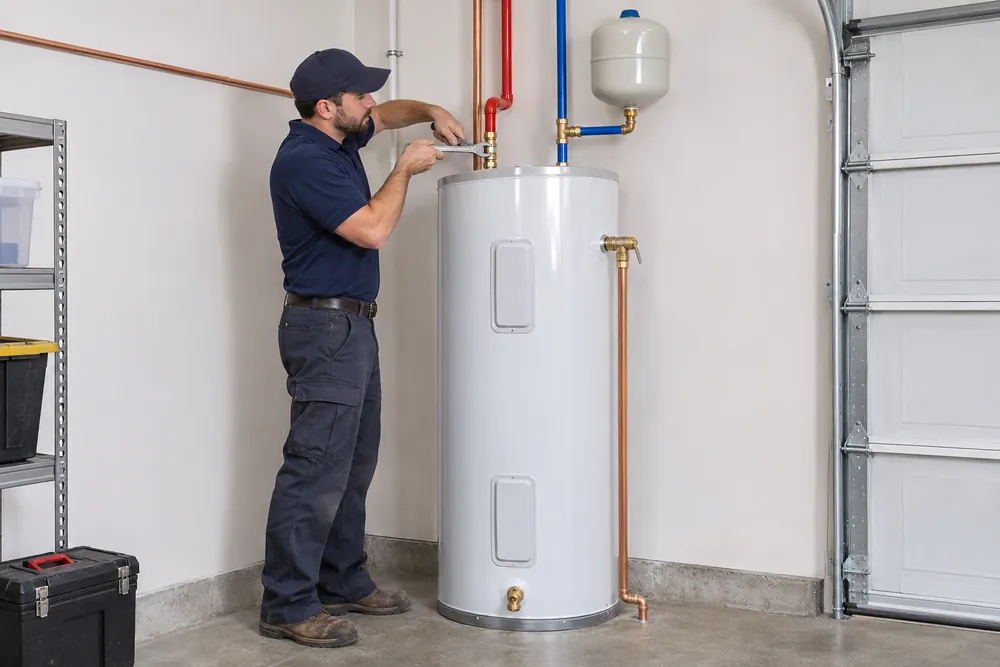
How Long Do Water Heaters Last?
The United States Department of Energy gives a typical lifespan of 8 to 12 years for a tank heater, with tankless models often reaching 20 years with maintenance. The real number depends on water quality, how often the unit is maintained and how hard it works.
In Southwest Georgia, mineral-rich water from the limestone aquifer leaves scale inside tanks. That scale can shorten life if the tank is never flushed. Our guide to hard water and water heaters in South Georgia explains how to slow it down.
| Type | Typical lifespan | Notes |
|---|---|---|
| Tank, gas | 8 to 12 years | Sediment affects the tank bottom and burner efficiency |
| Tank, electric | 8 to 12 years | Elements wear out and are often replaceable |
| Tankless, gas | Up to about 20 years | Needs periodic descaling in hard water |
| Heat pump water heater | 10 to 15 years | Higher cost up front, lower energy use |
Signs Your Water Heater Is Failing
Warning signs to watch for
- Water that is rusty, cloudy or smells metallic.
- Rumbling, popping or banging from the tank.
- Moisture or a puddle around the base.
- Hot water that runs out quickly or never gets hot enough.
- A unit more than ten years old with rising energy bills.
- Visible corrosion on the tank, pipes or fittings.
A leak from the tank body is almost always the end of the road. Steel tanks do not repair. A leak from a fitting, valve or relief valve may be fixable.
Repair or Replace: A Simple Decision Guide
- 1
Find the age
Look for the date on the rating label. The serial number often encodes the manufacture date.
- 2
Name the problem
Is it a part, such as a thermostat, element, igniter or valve, or the tank itself?
- 3
Compare costs
Get the repair price and the price for a new unit installed. Include any code upgrades.
- 4
Apply the rule of thumb
If the repair costs about half the price of a new unit or more, replacement is usually smarter.
- 5
Consider your plans
If you plan to stay for years, a new efficient unit pays you back. If you are selling soon, a repair may be enough.
Typical Repair and Replacement Costs
These are ballpark ranges for the Albany area. Your price will depend on the unit, access and code requirements.
| Work | Typical range | Comment |
|---|---|---|
| Thermostat or element replacement | $150 to $400 | Common on electric units |
| Gas valve or igniter repair | $200 to $600 | Depends on brand and part availability |
| Anode rod replacement | $150 to $350 | Can extend tank life if done early |
| Tank replacement, 40 to 50 gallons | $900 to $2,000 installed | Includes haul-away of the old unit in most cases |
| Tankless installation | $2,000 to $4,500 | Often needs venting and gas line changes |
Gas, Electric or Tankless?
Tank heaters are simple and familiar. They cost less up front, but they keep water hot all day and lose some heat. Tankless units heat water on demand and save floor space. They cost more, and a gas tankless unit may require a larger gas line and special venting. Heat pump models use less electricity, but they need room and airflow. A plumber can match the choice to your home, your fuel and your budget.
Safety Matters
Never ignore a leaking tank, a hissing relief valve or the smell of gas. Turn off the gas or power and the cold water supply, then call. A relief valve that discharges often means pressure or temperature is too high. Setting the thermostat to about 120 degrees Fahrenheit is a common safe and efficient choice. Keep flammable materials away from the unit, especially in garages and closets.
What a Failed Water Heater Can Damage
A tank that fails can release 40 to 50 gallons of water in a short time. If the unit sits in a closet or garage, water can reach drywall, flooring and stored belongings. A drain pan with a line to the outside limits the damage, and a simple leak sensor on the floor gives early warning. When a unit is old and sits inside the living space, many homeowners choose to replace it before it fails, as insurance against a mess.
Questions to Ask When Comparing Quotes
- Does the price include the haul-away of the old unit?
- Are the venting, gas line and electrical work included?
- Will the new unit meet current code, including an expansion tank where needed?
- What does the manufacturer warranty cover, and who handles labor?
- Is the unit sized for your household, not just the closet?
Preparing for a Replacement
Do not wait for a complete failure. After a flood, a storm or a long outage, controls and burners can be damaged. In Albany, where Hurricane Michael in 2018 left much of the city without power, many homeowners learned how fast an old unit can fail when it restarts. Planning a replacement lets you pick the model and the day, instead of settling for whatever is available in an emergency.
Who We Help
Our team handles water heater repair and replacement for homeowners throughout Albany, and in Camilla, Sylvester and nearby communities. If you suspect a hidden leak behind the heater, see our page on leak detection and repair. Call any time, day or night.
Have a plumbing problem right now? Call (866) 310-6010 and a plumber answers day or night.
Water Heater Questions
Check the rating label on the tank. The serial number often contains the month and year of manufacture, and the manufacturer can help decode it.
If the leak is from a fitting, valve or relief valve, often yes. If water comes from the tank itself, replacement is usually required.
It can be, especially if you want to save space and plan to stay for years. It costs more up front and may need venting or gas line changes.
Sediment on the bottom of the tank traps water that boils and pops. A flush may help, but heavy buildup can mean the tank is near the end of its life.
Need a Plumber Right Now?
Call any time. A real person answers day and night, including weekends and holidays.